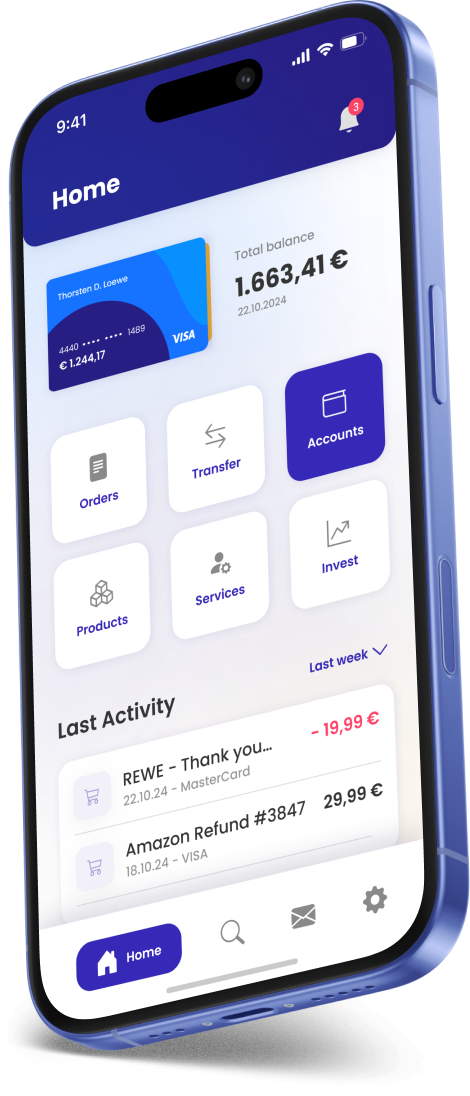
A financial app for managing multiple accounts and cards, track transactions, and to view detailed transaction statistics was the centerpiece of the design. It provides an easy and recognizable user experience to transfer money, monitor spending, and manage investments - whether for business or personal needs.
App Designs
projects in the finance b2b, finance b2c and in the educational space
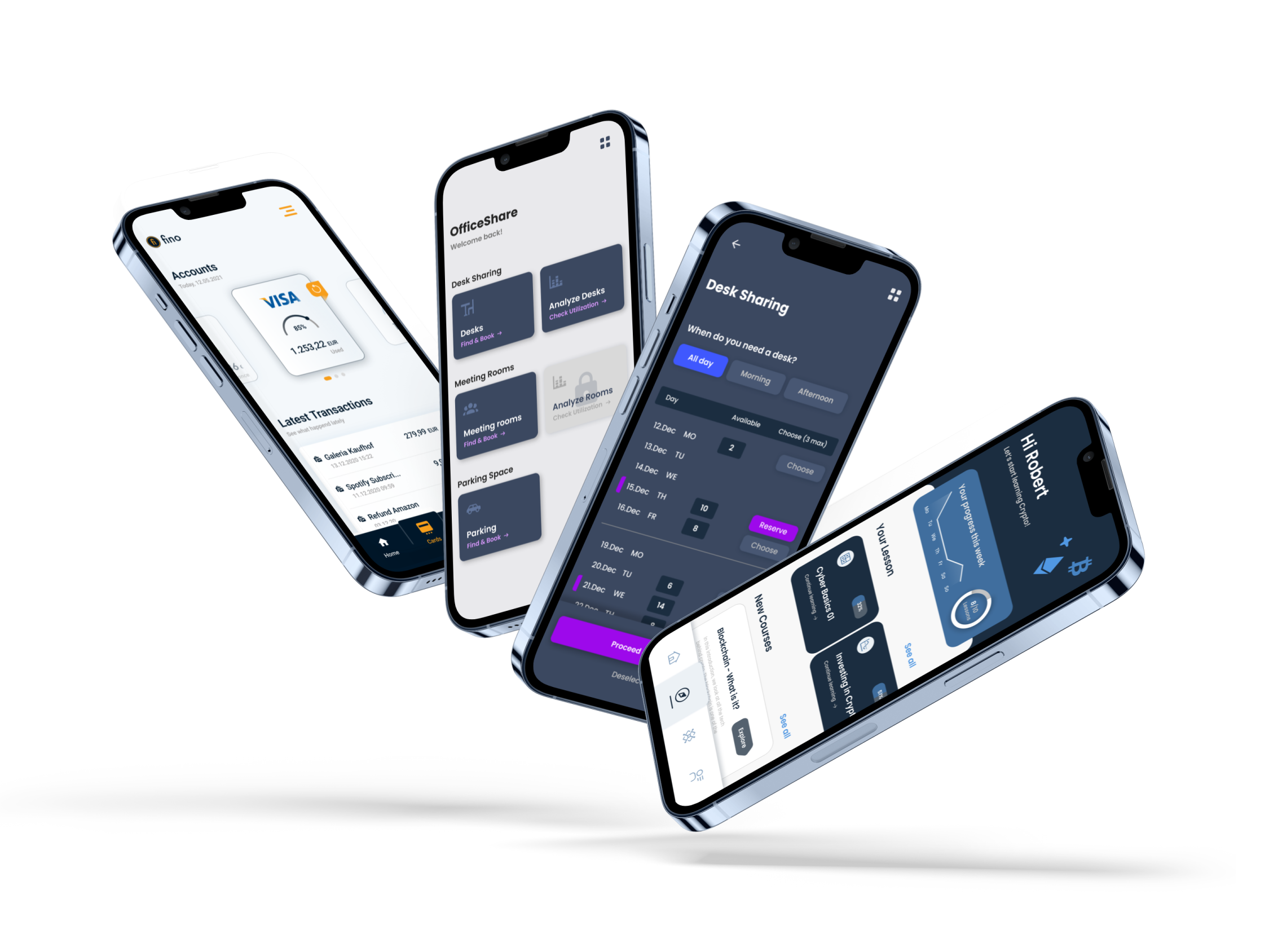
overview
company
Startups, multiple
industry
fintech , edtec
applied skills
UX/UI Design, App design
focus
Design of mobile application, focused on meaningful interactions on-the-go
Design Thinking & Rapid Prototyping
outcomes
Quick and easy navigation for complex tasks
Fast design-to-launch support
2017 - 2020
App Design
finance app b2b2c
Navigating complex tasks on tiny screens
The goal of the app
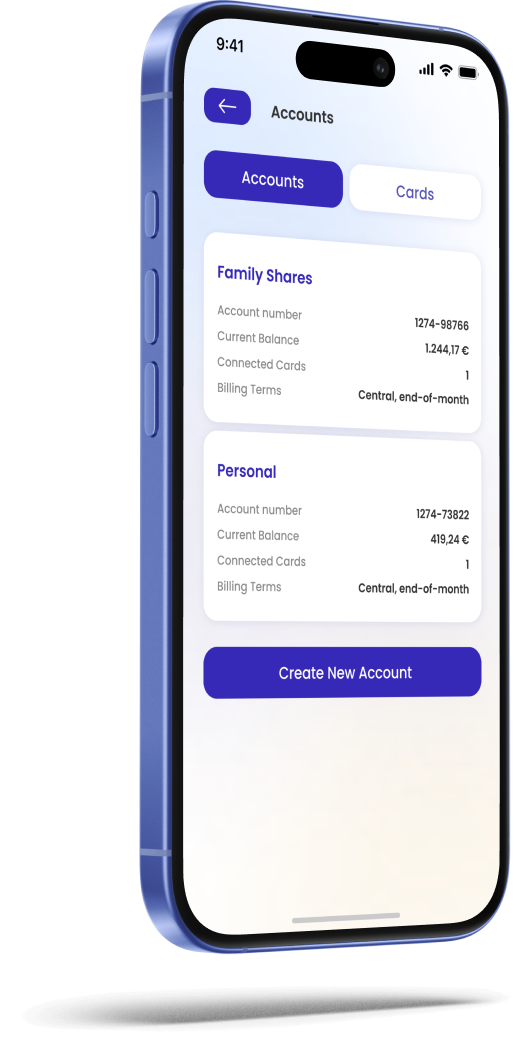
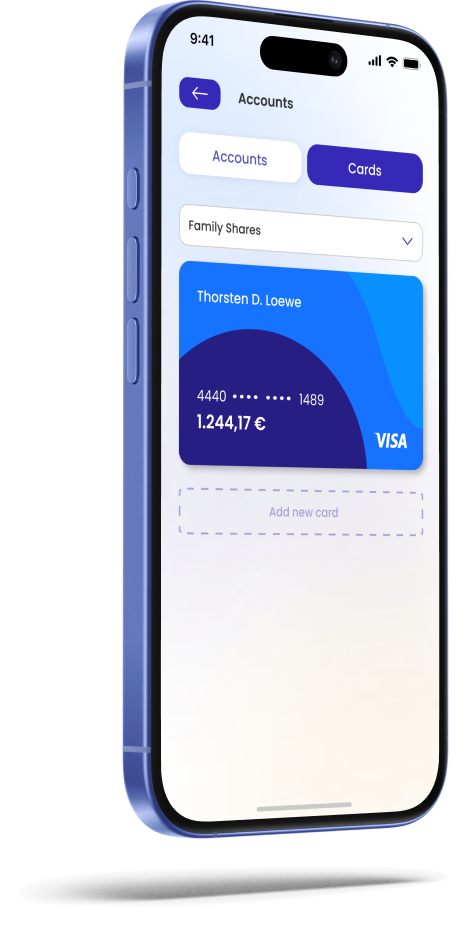
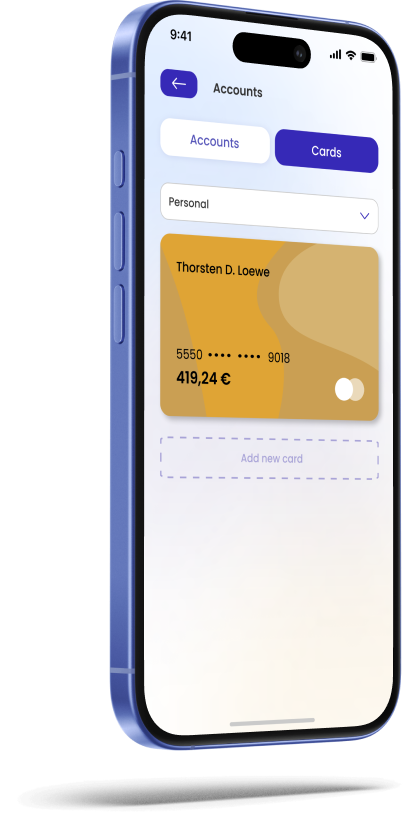
Multi account/ -card management
Complexity in banking comes with multiple account handling, where respectively multiple cards are connected to one account. However, the UI doesn’t need to be complex: Here the dropdown under “Cards” serves as a mental anchor of the connected account, always giving cue where you are and giving the option to change accounts quickly.
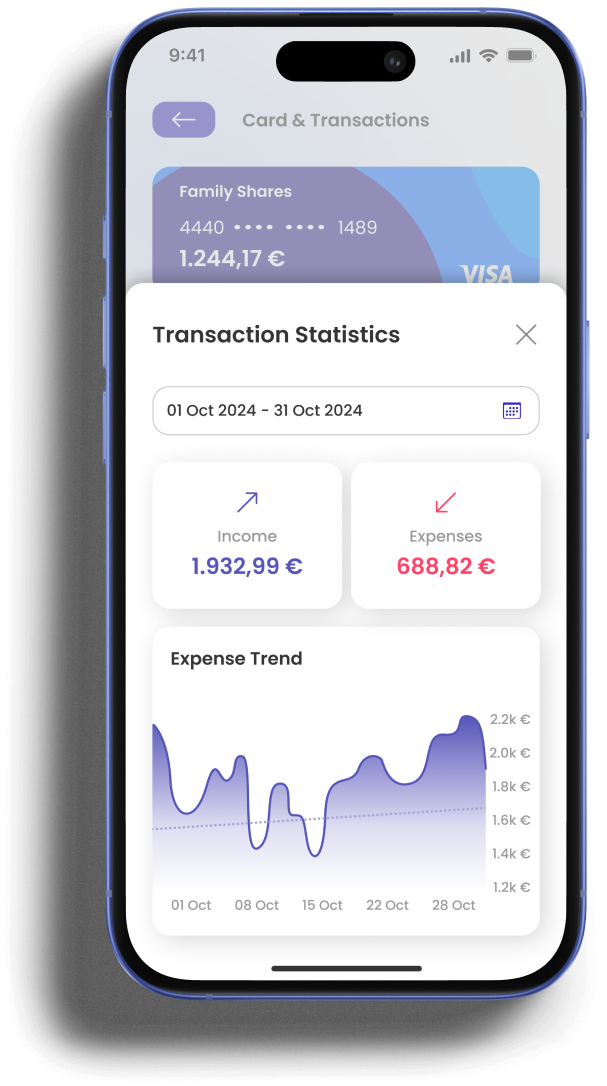
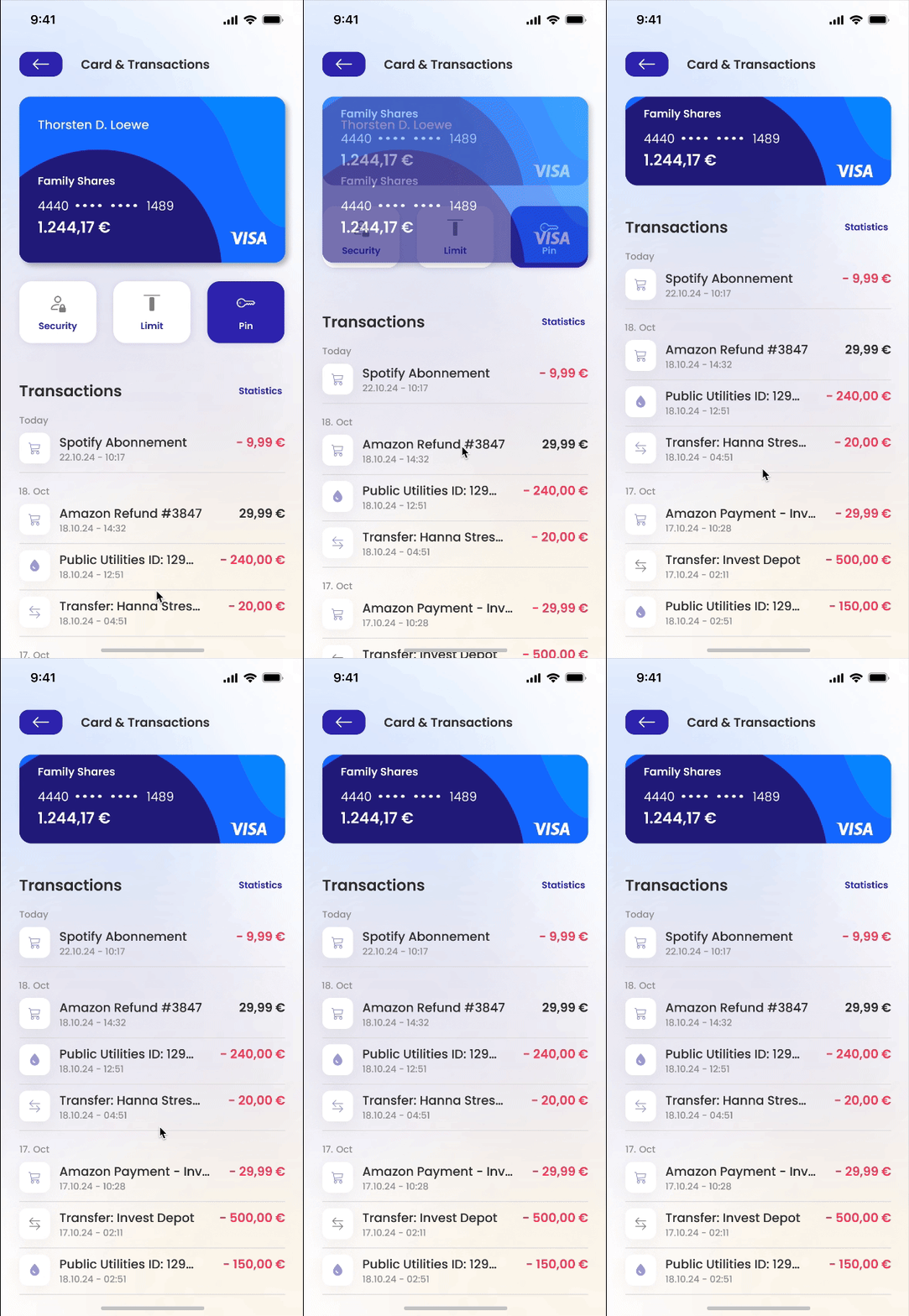
Card management & transaction stats
In both, B2B and B2C applications, card management functionalites, such as PIN viewer and security settings are important, for B2B also Limit adjustments. Not to forget transactions for the selected card and their statistics with expense trends in a selectable time period.
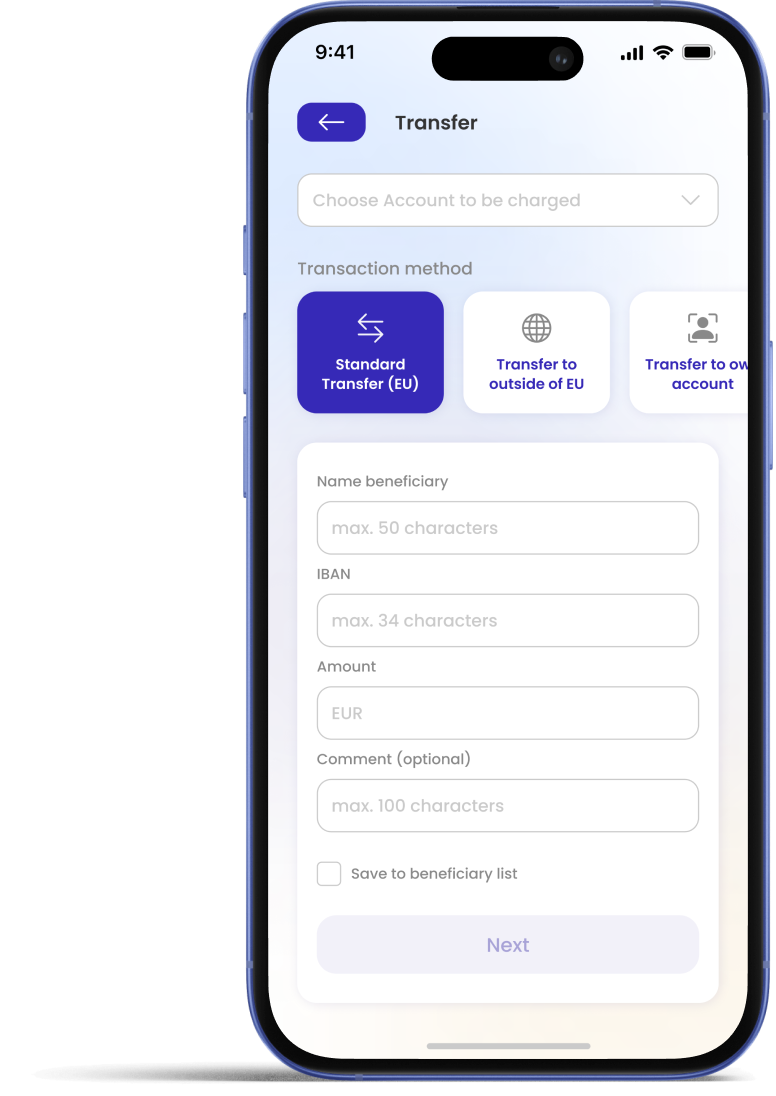
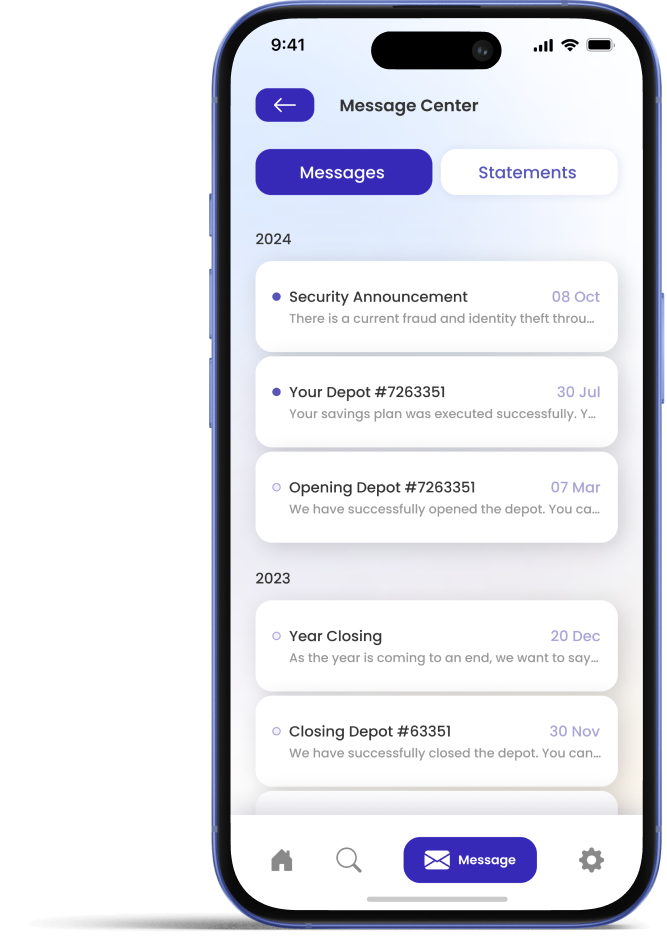
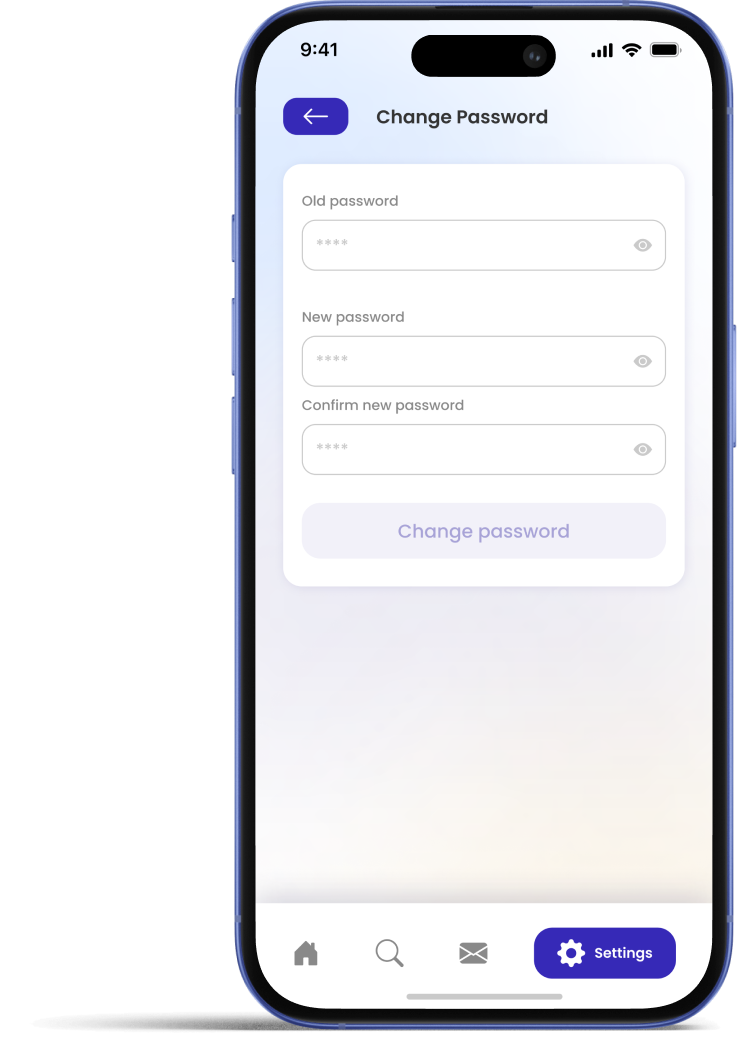
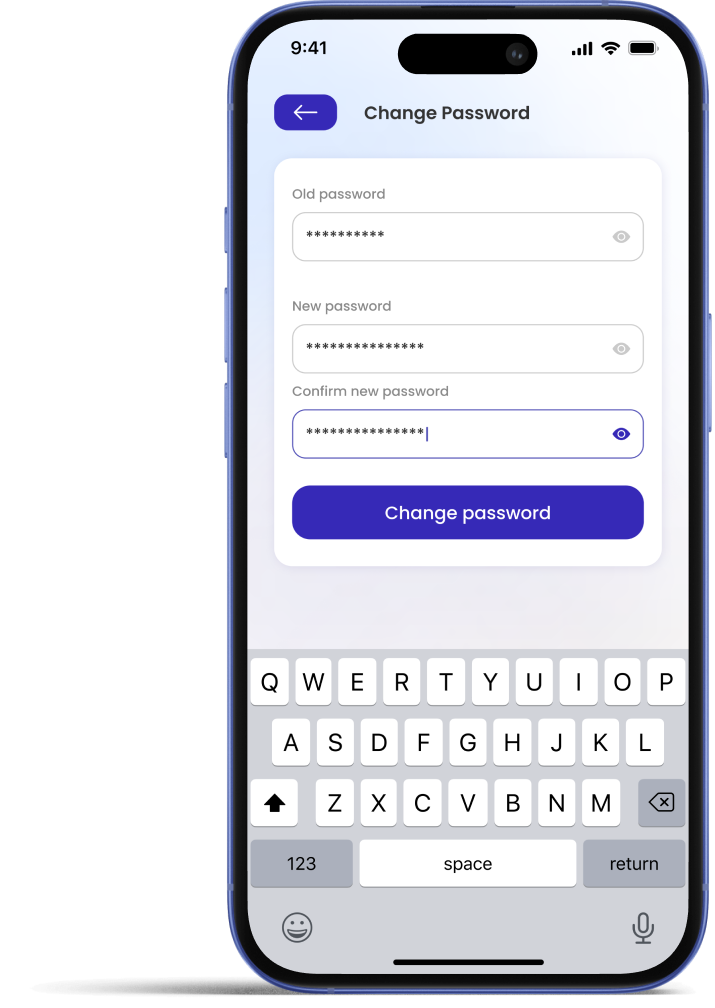
End-to-end app design
From money transfer to message- and notification center to settings, like password change screens, the app was prototyped and tested on multiple scenarios, in order to find the best holistic experience and the best information architecture for implementation.
finance app - retail
Guiding users through an onboarding experience
The goal of the app
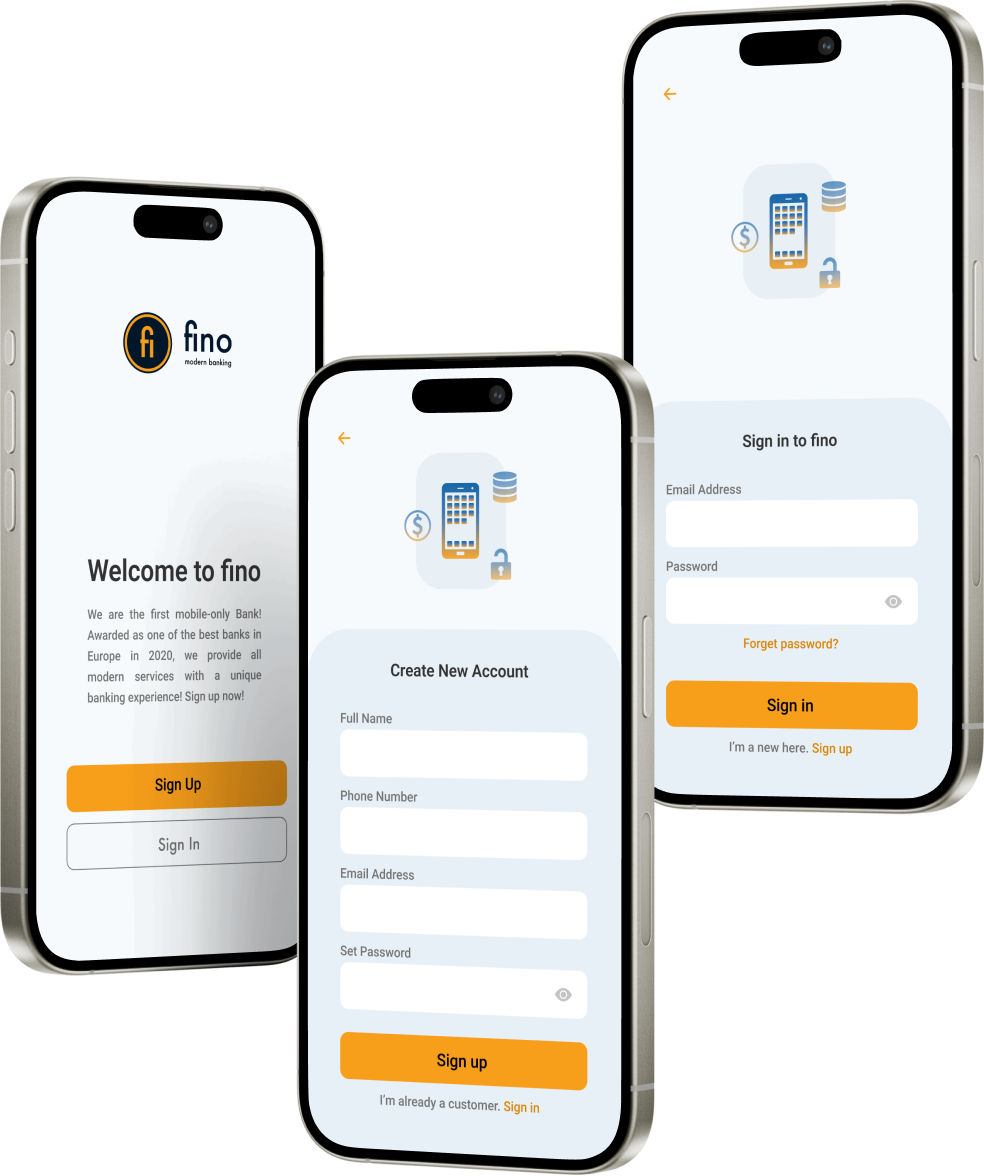
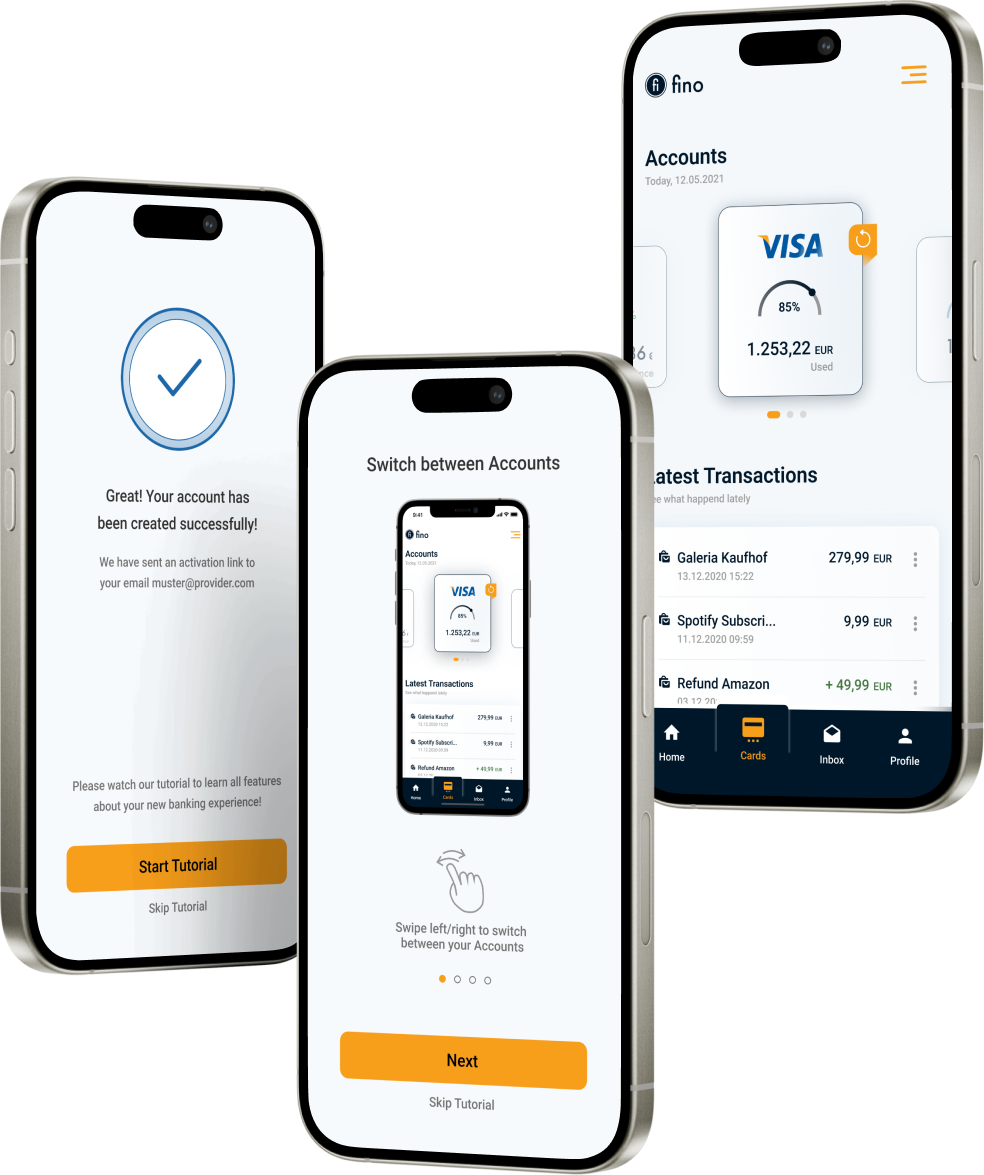
For a young startup, the first round of experimentation on their retail finance app focused on a smooth and understandable onboarding experience that doesn't cognitively overwhelm users.
Since an onboarding process often presents challenges to new customers, with complex steps, unclear instructions, and a lack of guidance that can lead to frustration easily and increases customer service calls, the app designs should remedy these usual pain points from beginning on.
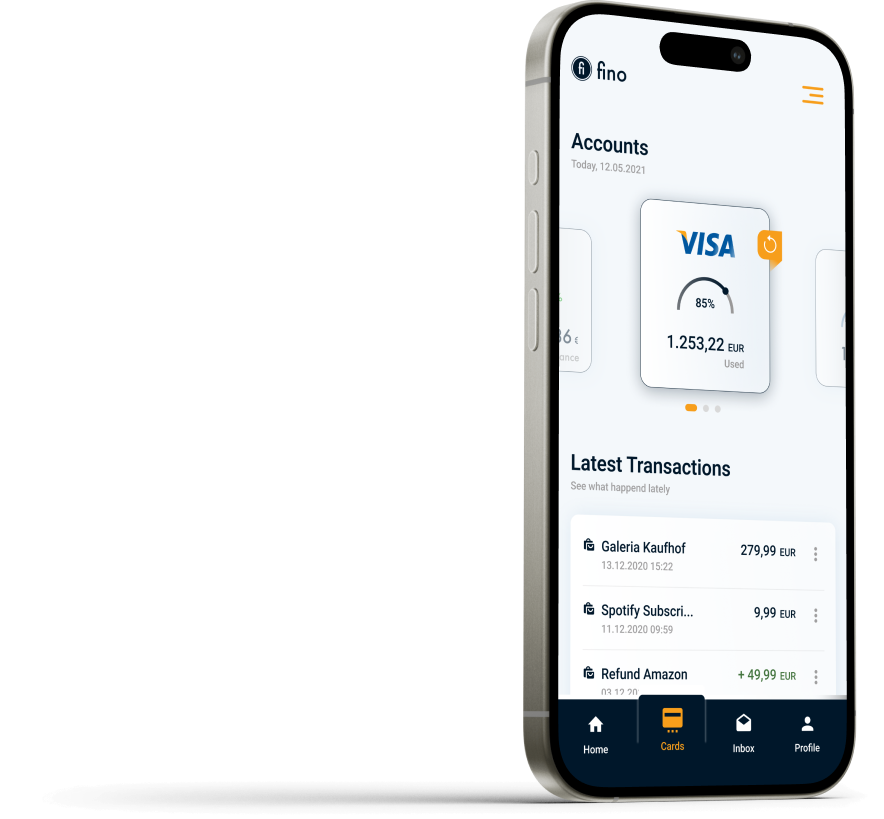
Building trust from the first interaction
The onboarding experience was designed to help users understand financial products quickly while building trust in a regulated environment. The focus was on clear language, progressive disclosure, and guided decision-making, allowing users to move at their own pace without feeling overwhelmed.
By combining concise explanations with contextual prompts, the onboarding reduced drop-off and helped users reach their first meaningful action faster — setting a strong foundation for long-term engagement.
learning crypto
Engaging education on-the-go
The goal of the app
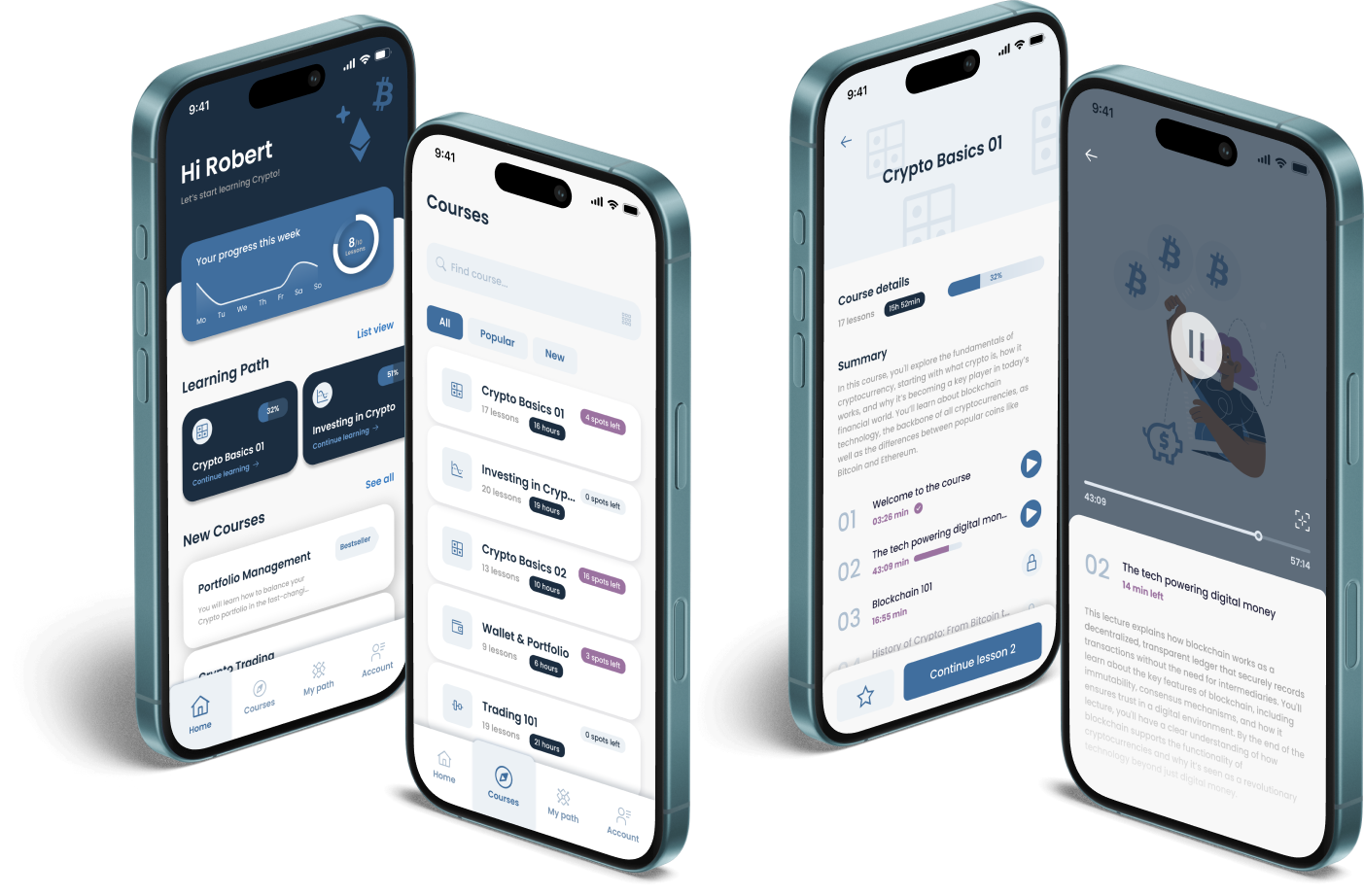
Creation of an engaging platform for learning about cryptocurrency, combining multi-medial content with gamified challenges to encourage continuous education. The main requirement was to lead users to explore various aspects of crypto through interactive lessons, quizzes and tasks that promote skill development.
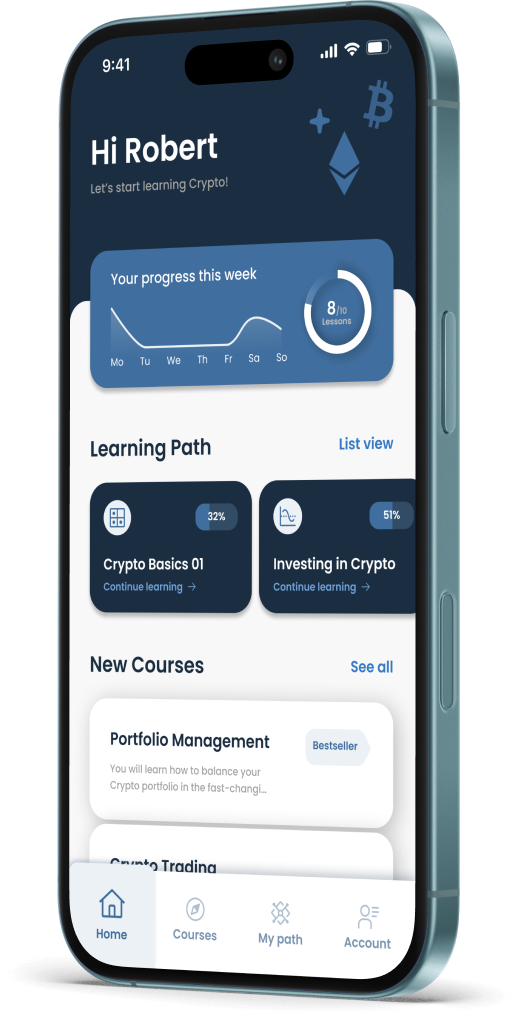
Learning crypto by doing, not reading
This learning app was designed to make crypto concepts approachable through short videos and interactive exercises. Instead of passive consumption, users learn by completing small, practical tasks that reinforce each concept immediately.
The experience balances simplicity with accuracy, helping users build confidence step by step while avoiding information overload — especially important in a domain that is both complex and fast-moving.
reflection apps
What these projects reinforced
Clarity before feature richness
These app projects showed that in complex domains, clarity is more important than feature richness. Users don’t need to know everything at once - they need to feel oriented, supported, and confident enough to take the next step.
These experiences also highlighted the responsibility of UX in regulated or high-risk domains: good design not only improves usability, it actively reduces user anxiety and prevents costly mistakes.
Users need to understand, before acting
Across the apps, the design work focused on making complex topics easier to understand and safer to engage with. Users need to be able to reach meaningful actions fast and with confidence.